Baruch Hashem Adonaiבושאהמשהוהי
theTORAH means, "to point the way" and is also interchangeable with the
english word, "law."
| Exodus 20:1 | |
| Hebrew | :רמאל הלאה םירבדה-לכ תא םיהלא רבדיו |
| Translit | va.ye.da.ber e.lo.him et kol-ha.de.va.rim ha.e.le le.mor: |
| English | And El spoke all these words, saying: |
| Exodus 20:2 | |
| Hebrew | :םידבע
תיבמ םירצמ
ץראמ
ךיתאצוה רשא
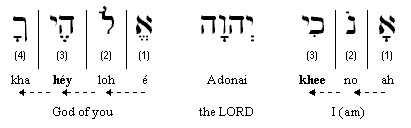
ךיהלא הוהי
יכנא |
| Translit | a.no.khi a.do.nai e.lo.hei.kha a.sher ho.tse.ti.kha me.e.rets mits.ra.yim mi.beit a.va.dim: |
| English | I am Yehovah thy Elohim, who brought thee out of the land of Egypt, out of the house of bondage. |
| Exodus 20:3 | |
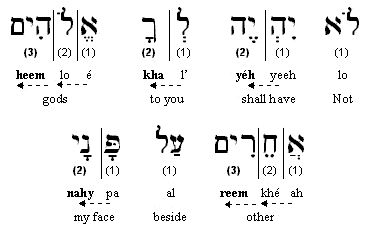
| Hebrew | :ינפ-לע םירחא םיהלא ךל היהי-אל |
| Translit | lo-yih.ye le.kha e.lo.him a.khe.rim al-pa.nai: |
| English | Thou shalt have no other gods before Me. |
| Exodus 20:4 | |
| Hebrew | ץראב
רשאו לעממ
םימשב רשא
הנומת-לכו
לספ ךל השעת-אל :ץראל תחתמ םימב רשאו תחתמ |
| Translit | lo-ta.a.se le.kha fe.sel ve.khol-te.mu.na a.sher ba.sha.ma.yim mi.ma.al va.a.sher ba.a.rets mi.ta.khat va.a.sher ba.ma.yim mi.ta.khat la.a.rets: |
| English | Thou shalt not make unto thee a graven image, nor any manner of likeness, of any thing that is in heaven above, or that is in the earth beneath, or that is in the water under the earth; |
| Exodus 20:5 | |
| Hebrew | אנק
לא ךיהלא
הוהי יכנא יכ
םדבעת אלו
םהל הוחתשת-אל :יאנשל םיעבר-לעו םישלש-לע םינב-לע תבא ןוע דקפ |
| Translit | lo-tish.ta.kha.ve la.hem ve.lo ta.av.dem ki a.no.khi a.do.nai e.lo.hei.kha el ka.na po.ked a.von a.vot al-ba.nim al-shi.le.shim ve.al-ri.be.im le.son.ai: |
| English | thou shalt not bow down unto them, nor serve them; for I Yehovah thy el am a jealous El, visiting the iniquity of the fathers upon the children unto the third and fourth generation of them that hate Me; |
| Exodus 20:6 | |
| Hebrew | :יתוצמ ירמשלו יבהאל םיפלאל דסח השעו |
| Translit | ve.o.se khe.sed la.a.la.fim le.o.ha.vai u.le.shom.rei mits.vo.tai: |
| English | and showing mercy unto the thousandth generation of them that love Me and keep My commandments. |
| Exodus 20:7 | |
| Hebrew | -רשא
תא הוהי הקני
אל יכ אושל
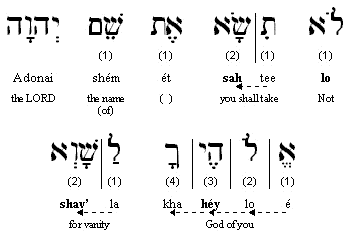
ךיהלא הוהי-םש-תא
אשת אל :אושל ומש-תא אשי |
| Translit | lo ti.sa et-shem-a.do.nai e.lo.hei.kha la.shav ki lo ye.na.ke a.do.nai et a.sher-yi.sa et-she.mo la.shav: |
| English | Thou shalt not take the name of Yehovah thy El in vain; for Yehovah will not hold him guiltless that taketh His name in vain. |
| Exodus 20:8 | |
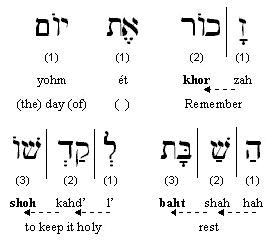
| Hebrew | :ושדקל תבשה םוי-תא רוכז |
| Translit | za.khor et-yom ha.sha.bat le.kad.sho: |
| English | Remember the sabbath day, to keep it holy. |
| Exodus 20:9 | |
| Hebrew | :ךתכאלמ-לכ תישעו דבעת םימי תשש |
| Translit | she.shet ya.mim ta.a.vod ve.a.si.ta kol-me.lakh.te.kha: |
| English | Six days shalt thou labour, and do all thy work; |
| Exodus 20:10 | |
| Hebrew | התא
הכאלמ-לכ
השעת-אל
ךיהלא הוהיל
תבש יעיבשה
םויו :ךירעשב רשא ךרגו ךתמהבו ךתמאו ךדבע ךתבו ךנבו |
| Translit | ve.yom ha.she.vi.i sha.bat la.a.do.nai e.lo.hei.kha lo-ta.a.se khol-me.la.kha a.ta u.vin.kha u.vi.te.kha av.de.kha va.a.mat.kha u.ve.hem.te.kha ve.ger.kha a.sher bish.a.rei.kha: |
| English | but the seventh day is a sabbath unto Yehovah thy El, in it thou shalt not do any manner of work, thou, nor thy son, nor thy daughter, nor thy man-servant, nor thy maid-servant, nor thy cattle, nor thy stranger that is within thy gates; |
| Exodus 20:11 | |
| Hebrew | -תאו
םיה-תא ץראה-תאו
םימשה-תא
הוהי השע
םימי-תשש יכ םוי-תא הוהי ךרב ןכ-לע יעיבשה םויב חניו םב-רשא-לכ :והשדקיו תבשה |
| Translit | ki she.shet-ya.mim a.sa a.do.nai et-ha.sha.ma.yim ve.et-ha.a.rets et-ha.yam ve.et-kol-a.sher-bam va.ya.nakh ba.yom ha.she.vi.i al-ken be.rakh a.do.nai et-yom ha.sha.bat va.ye.kad.she.hu: |
| English | for in six days Yehovah made heaven and earth, the sea, and all that in them is, and rested on the seventh day; wherefore Yehovah blessed the sabbath day, and hallowed it. |
| Exodus 20:12 | |
| Hebrew | -רשא
המדאה לע
ךימי ןוכראי
ןעמל ךמא-תאו
ךיבא-תא דבכ :ךל ןתנ ךיהלא הוהי |
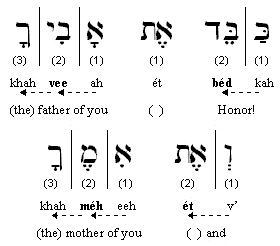
| Translit | ka.bed et-a.vi.kha ve.et-i.me.kha le.ma.an ya.a.ri.khun ya.mei.kha al ha.a.da.ma a.sher-a.do.nai e.lo.hei.kha no.ten lakh: |
| English | Honour thy father and thy mother, that thy days may be long upon the land which Yehovah thy el giveth thee. |
| Exodus 20:13 | |
| Hebrew | הנעת-אל
ס בנגת אל ס
ףאנת אל ס
חצרת אל :רקש דע ךערב |
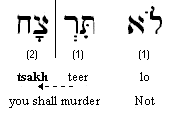
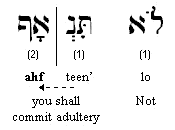
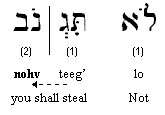
| Translit | lo tir.tsakh s lo tin.af s lo tig.nov s lo-ta.a.ne ve.re.a.kha ed sha.ker: |
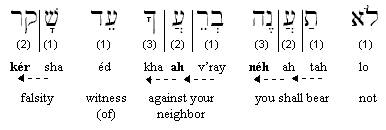
| English | Thou shalt not murder; Thou shalt not commit adultery; Thou shalt not steal; Thou shalt not bear false witness against thy neighbour. |
| Exodus 20:14 | |
| Hebrew | ותמאו
ודבעו ךער
תשא דמחת-אל ס
ךער תיב דמחת
אל :ךערל רשא לכו ורמחו ורושו |
| Translit | lo takh.mod beit re.e.kha s lo-takh.mod e.shet re.e.kha ve.av.do va.a.ma.to ve.sho.ro va.kha.mo.ro ve.khol a.sher le.re.e.kha: |
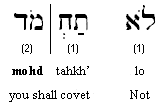
| English | Thou shalt not covet thy neighbour's house; thou shalt not covet thy neighbour's wife, nor his man-servant, nor his maid-servant, nor his ox, nor his ass, nor any thing that is thy neighbour's. |
| Exodus 20:15 | |
| Hebrew | -תאו
רפשה לוק תאו
םדיפלה-תאו
תלוקה-תא
םיאר םעה-לכו :קחרמ ודמעיו ועניו םעה אריו ןשע רהה |
| Translit | ve.khol-ha.am ro.im et-ha.ko.lot ve.et-ha.la.pi.dim ve.et kol ha.sho.far ve.et-ha.har a.shen va.yar ha.am va.ya.nu.u va.ya.am.du me.ra.khok: |
| English | And all the people perceived the thunderings, and the lightnings, and the voice of the horn, and the mountain smoking; and when the people saw it, they trembled, and stood afar off. |
| Exodus 20:16 | |
| Hebrew | םיהלא
ונמע רבדי-לאו
העמשנו ונמע
התא-רבד השמ-לא
ורמאיו :תומנ-ןפ |
| Translit | va.yom.ru el-mo.she da.ber-a.ta i.ma.nu ve.nish.ma.a ve.al-ye.da.ber i.ma.nu e.lo.him pen-na.mut: |
| English | And they said unto Moses: 'Speak thou with us, and we will hear; but let not Elohim speak with us, lest we die.' |
| Exodus 20:17 | |
| Hebrew | אב
םכתא תוסנ
רובעבל יכ
וארית-לא םעה-לא
השמ רמאיו :ואטחת יתלבל םכינפ-לע ותארי היהת רובעבו םיהלאה |
| Translit | va.yo.mer mo.she el-ha.am al-ti.ra.u ki le.va.a.vur na.sot et.khem ba ha.e.lo.him u.va.a.vur tih.ye yir.a.to al-pe.nei.khem le.vil.ti te.khe.ta.u: |
| English | And Moses said unto the people: 'Fear not; for elohim is come to prove you, and that His fear may be before you, that ye sin not.' |
FURTHER STUDY
Torah (the ten Commandments)

Hebrew (and the English transliteration) are read from right
to left.
|